
NOISELetter
Archive of all Newsletters
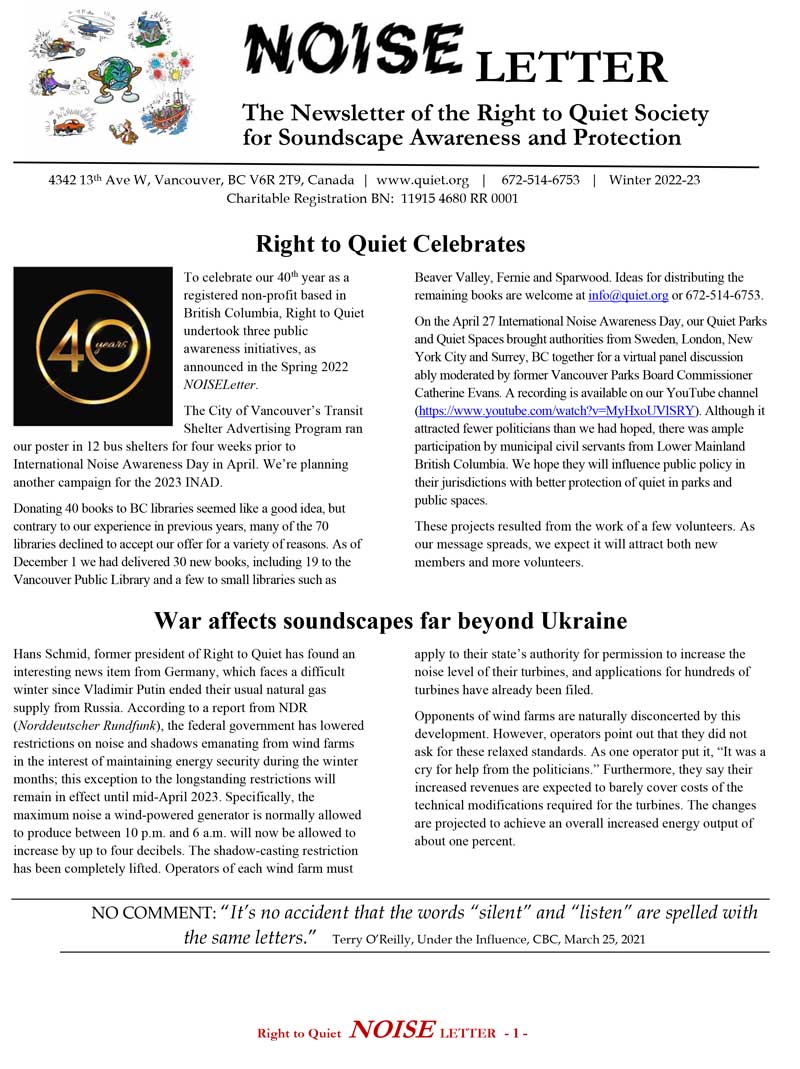
Winter 2022-2023
- Right to Quiet Celebrates
- War affects soundscapes far beyond Ukraine
- David Sadoway joins Board of Directors
- Educating People to the Dangers of Noise Pollution through Fiction
- Struggling for Quiet in Puerto Rico
- Not Serendipity
- New York City Expands its Sound & Noise Education Module
- AGM Reviews Noise Camera Technology
- New Approaches in the Search for Quieter Restaurants
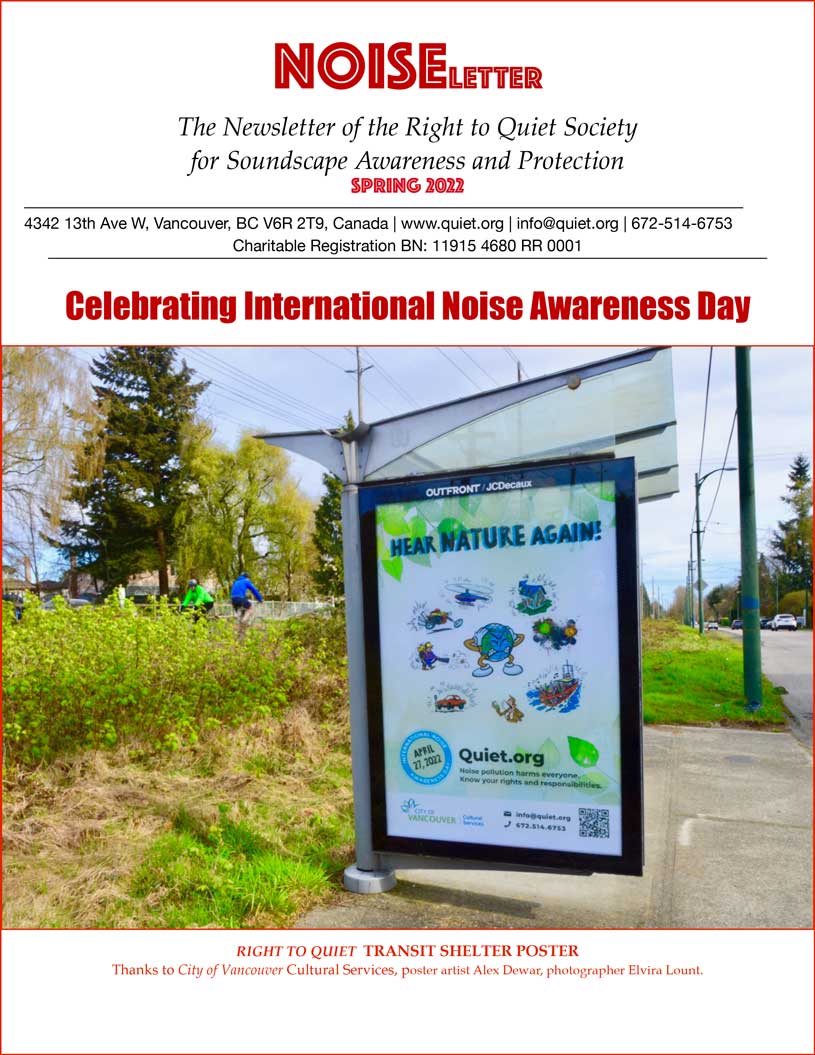
Spring 2022
- Looking to the Future
- INAD Initiatives 2022
- Quiet Parks and Quiet Spaces Zoom Meeting April 27
- Brief History of INAD
- Gulf Islands Freighter Invasion
- On Being a Good Neighbor
- 40 Years of Protecting Soundscapes
- Considering a Heat Pump?
- Quiet Reads
- Call to Action – Noisy Motor Boats
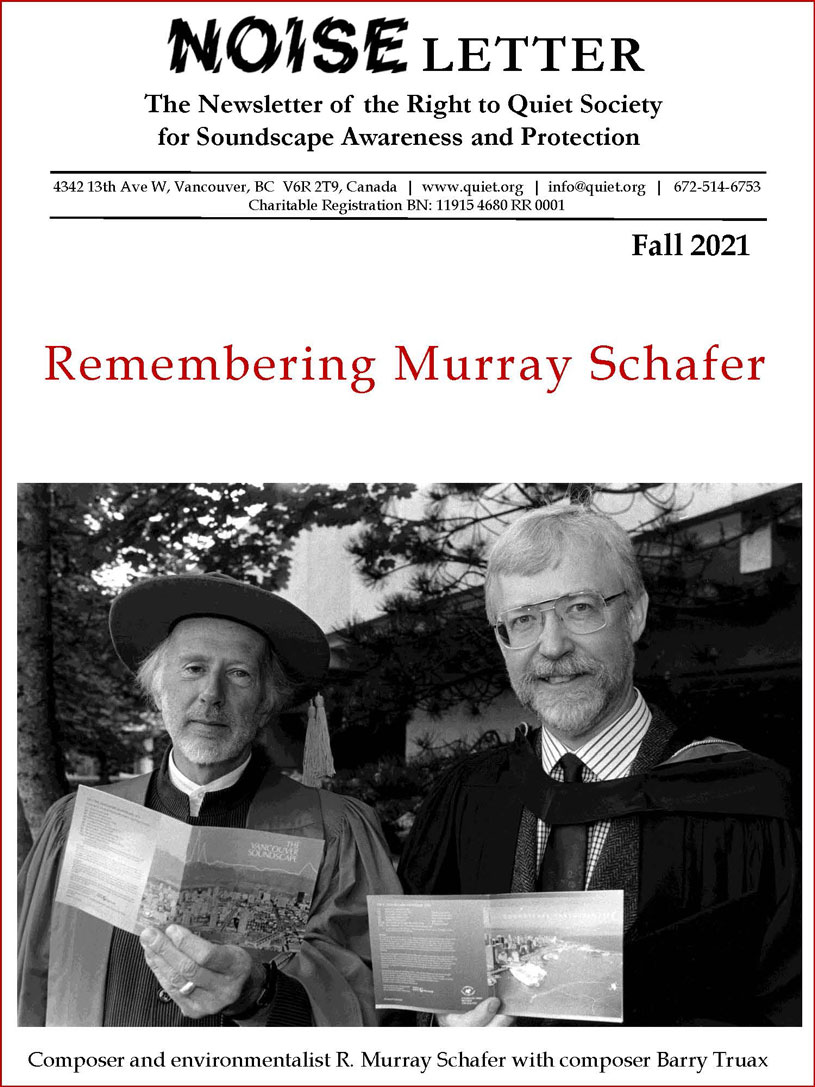
Fall 2021
- Remembering Murray Schafer
- Virtual Annual General Meeting
- Quiet Parks and Quiet Places: An update on Vancouver beach noise
- Expanded outdoor dining brings much needed cheer and some challenges
- Home Sweet Home: A manual on finding a quiet place to live
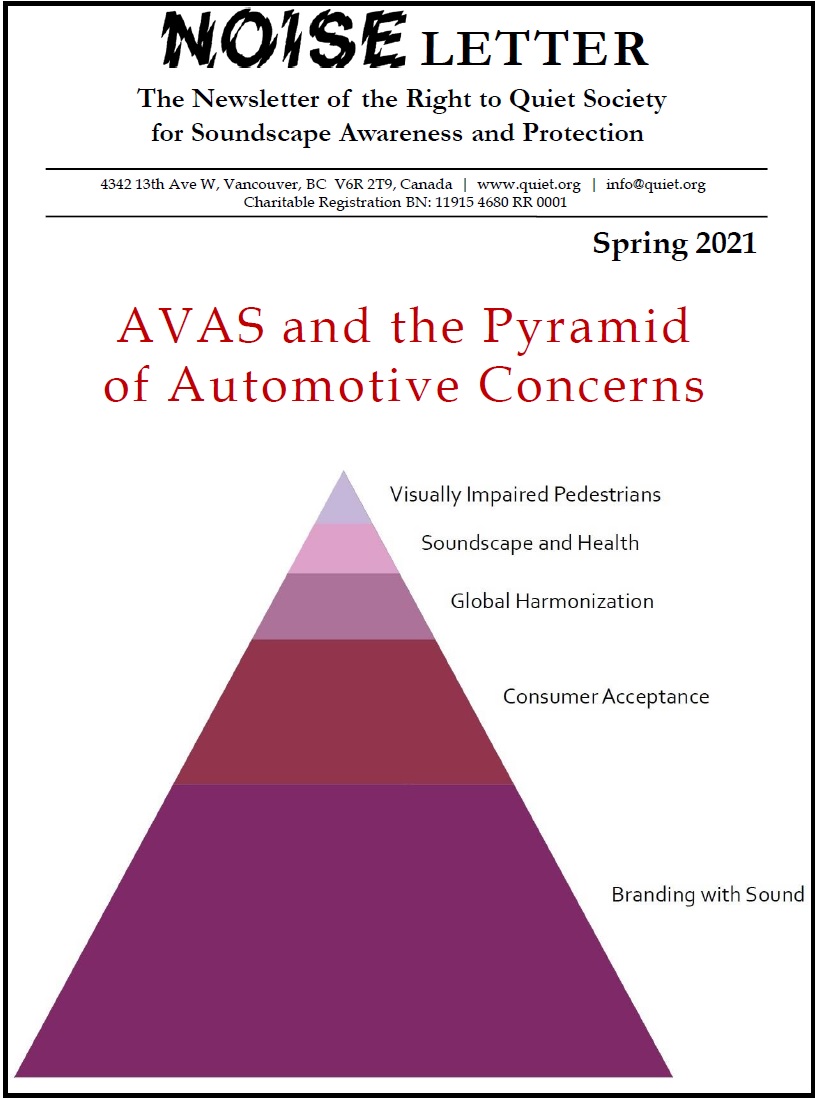
Spring 2021
- Will pedestrian warning sounds for electric cars be discernible?
- Peaceful paradise lost – due to freighter noise
- Right to Quiet has two new Board members at large
- Honouring Our Past President Hans Schmid
- In Memoriam: Ilse Schnirch (1936 – 2021)
- In Memoriam: Ann Shelton Foster (1938 – 2019)
- Position statement on amplified music in Vancouver parks
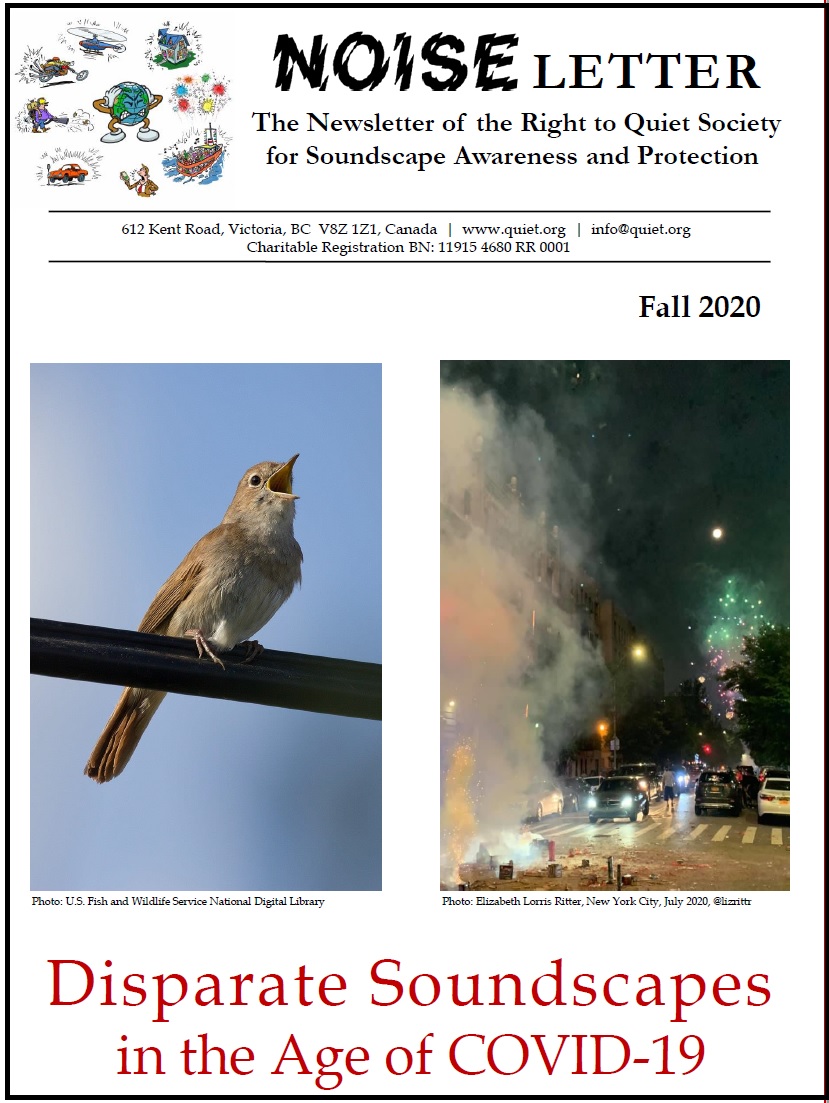
Fall 2020
- Disparate Soundscapes in the Age of COVID-19
- Virtual Annual General Meeting held on November 21
- Protect Our Quiet Natural Wild Spaces
- Tell Saanich Council to Ban Gas-Powered Leaf Blowers
- Changes within the Board of Directors
- Fireworks from Vienna to Berlin
- Disparate soundscapes in New York City
- Hospital-Based Music Therapy Interventions
- Academic textbook chapter on reducing urban noise
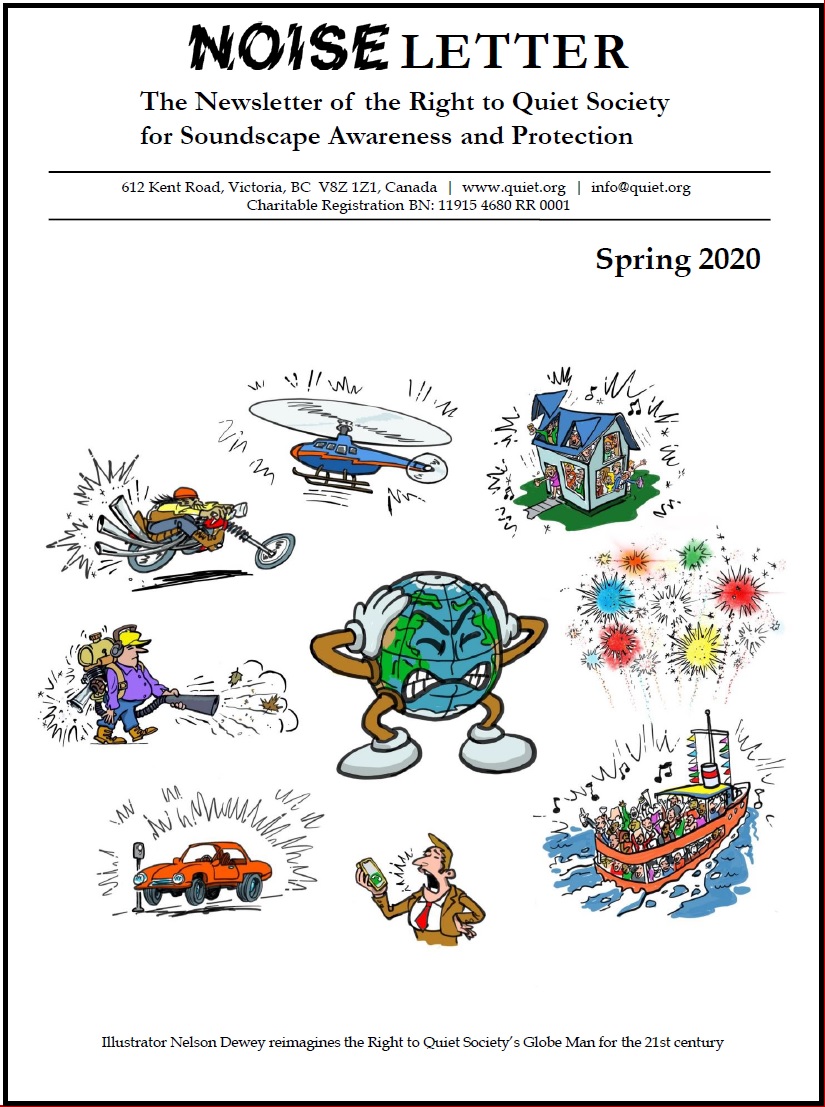
Spring 2020
- Right to Quiet commissions cartoonist Nelson Dewey to update Globe Man
- International Year of Sound affected by COVID-19 pandemic
- 25th anniversary of International Year of Sound affected by pandemic
- Addressing residential and community noise
- Target MyDevice phone app creates honking sounds in stores
- News briefs
- Global Program of Hush City Soundwalks
- JASA Call for papers on COVID-19 pandemic acoustic effects
- Center for Hearing and Communication holds virtual gathering for INAD
- Meditative uses of sound
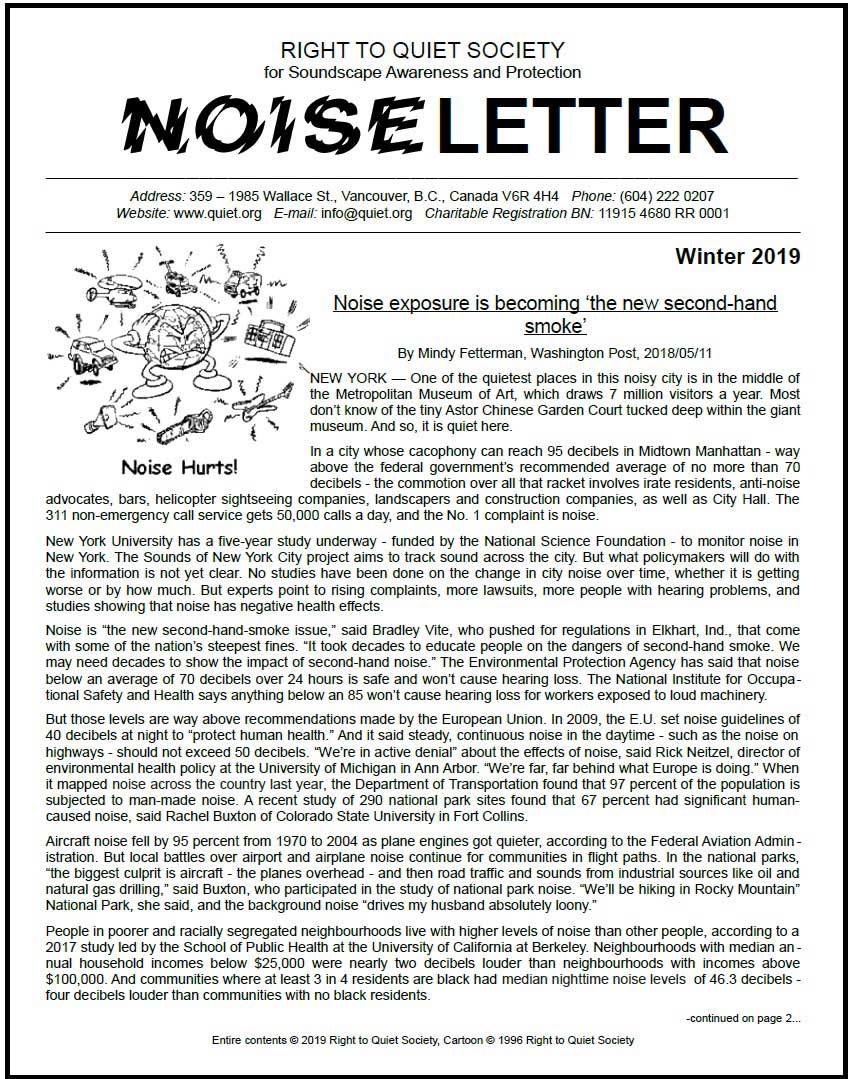
Winter 2019
Noise exposure is becoming ‘the new second-hand smoke’
How Barcelona shushed noise-makers with sensors
Quiet dentist in Vancouver
Singing road strikes wrong chord with Dutch villagers
Vancouver portable energy company turns gaze to Hollywood
Scaredy-cat cougars frightened into killing more prey
Subplate neurons are the first cortical neurons to respond to sensory stimuli
World Hearing Day 2019
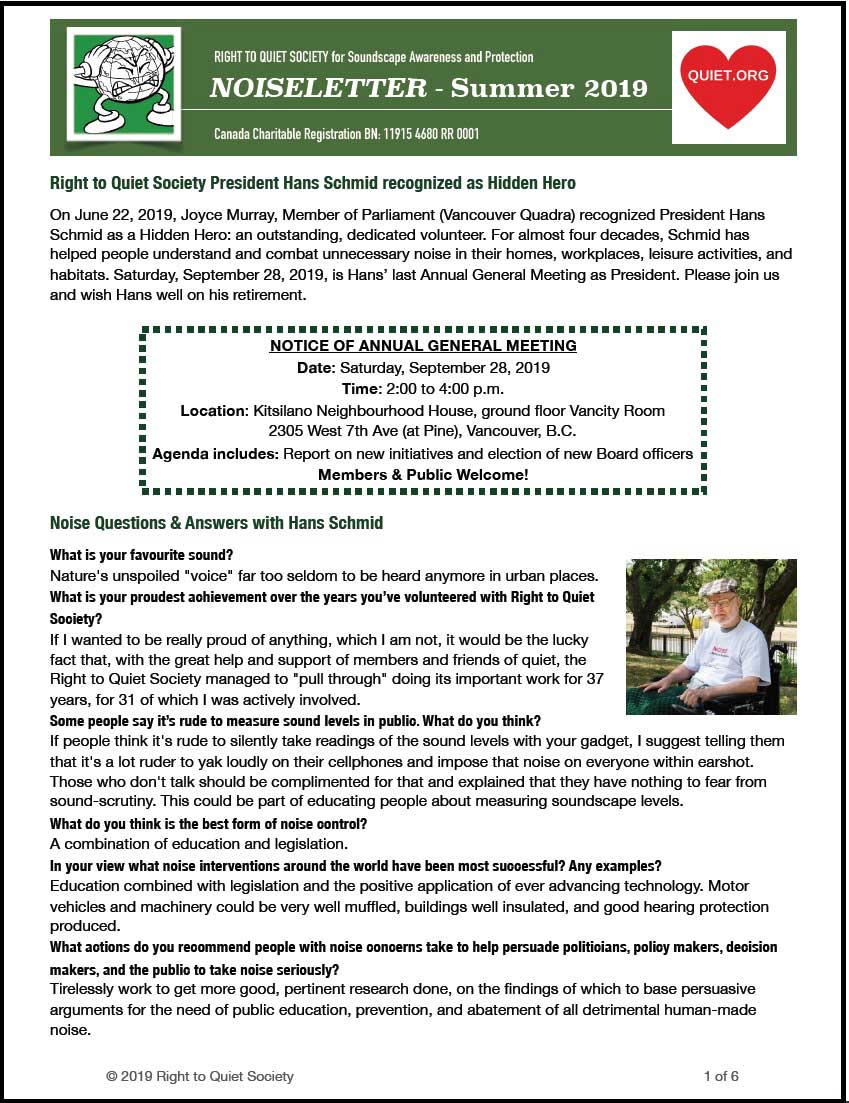
Summer 2019
Notice of Annual General Meeting
Noise questions and answers with Hans Schmid
Tube workers and commuters at risk of hearing loss
Children who say hand dryers “hurt my ears” are correct
Drones to deliver incessant buzzing noise and packages
EU Laws requiring noisy electric cars ignore public health guidelines
Toronto residents, business owners gather to voice noise-level concerns
Cities are louder than ever — and it’s the poor who suffer most
Attempt to tackle the pollution problem with barriers
Data centre noise still an issue in Labrador City, Newfoundland
How fireworks can affect your health and the ecosystem
Letter to Editor: Where is the leadership on air show noise pollution?
What can you do for quiet society?
Spring 2019
Quiet cheers for President Hans Schmid
Community noise, hearing health, and communication limits
Simon Fraser University: Noise in the City panel discussion
Citizen science app updates
Climate change and unhealthy wind turbine noise
Noisy oil port planned for Fraser River estuary ecosystem
Winter 2018
In Search of Silence
More Silence Less Noise: When environmental noise disturbs your living
Impact of Noise on Health: The Divide between Policy and Science
Book review by John Morse: Guide to Modified Exhaustsystems
How City Noise is Slowly Killing You
The squeaky SkyTrain wheels should get some grease
NY hospitals testing ‘ambient’ ambulance sirens
Musical training sharpens and bonds ears and tongue to hear speech better
Spring 2018
Noise discrimination against people with hearing loss, tinnitus, and hyperacusis
Did you hear that voice? It could be your brain looking for patterns
Advertising “quiet” makes good business sense
LED streetlight conversion
A multisensory effect on the mechanics of hearing
Trapping large objects with sound
Aquatic eavesdropping
Industrial noise compels Savannah sparrows to change their tune
INAD 2018 campaign
Winter 2017
Rare Earth Sound
Which is safer – tonal or broadband reversing alarms?
Calgary noise bylaw gets a rewrite for when bands drop the bass
Cities try different tactics to regulate noise
The mystery noise driving the world mad
The Quiet Coalition debuts in the USA
Loud enough for you?
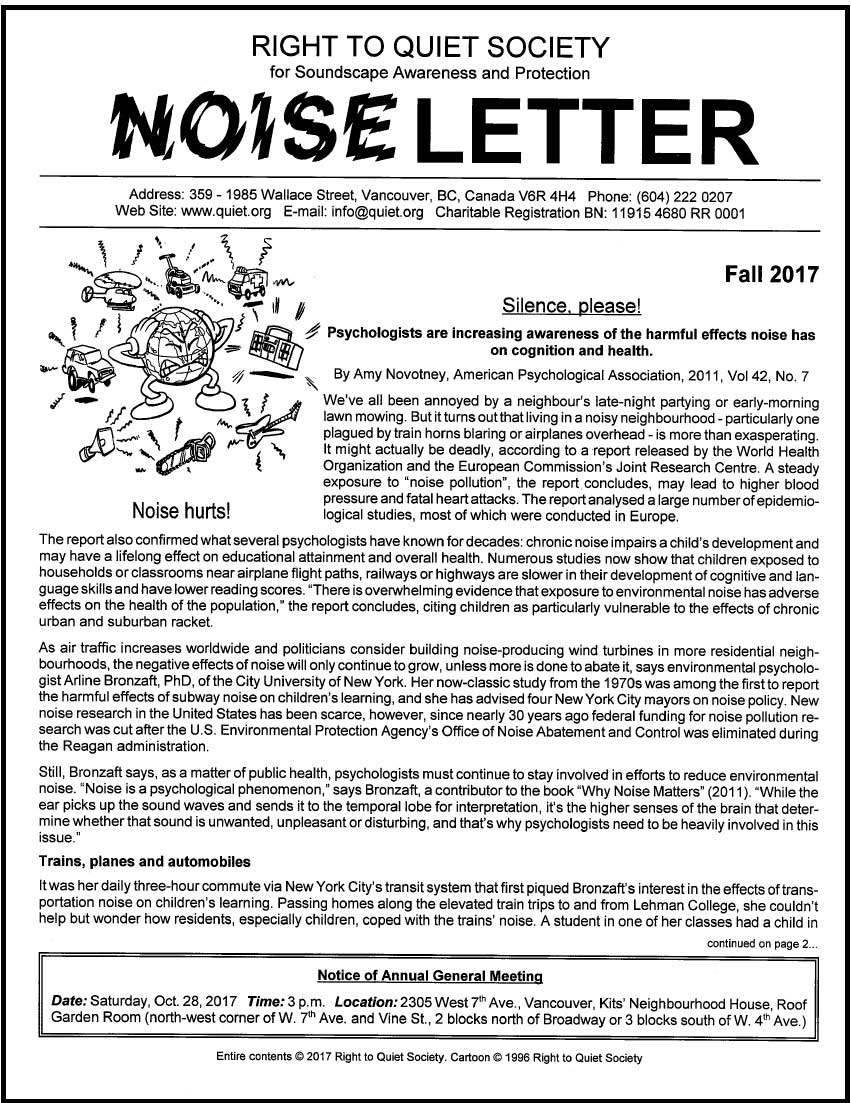
Fall 2017
Psychologists raise awareness of harmful effects of noise on cognition
In Pursuit of Silence
Some vessels honour Port of Vancouver go-slow request to protect killer whales
Plant roots use sound to locate water
Indigenous stories lead scientists to discover plants can hear
Watch this blind man ‘see’ the world with sound
Up, up in the air: flying taxis are taking off
Planning ahead for International Noise Awareness Day and World Listening Day
Vancouver Police Department rolls out new rides
Rescuers need silence
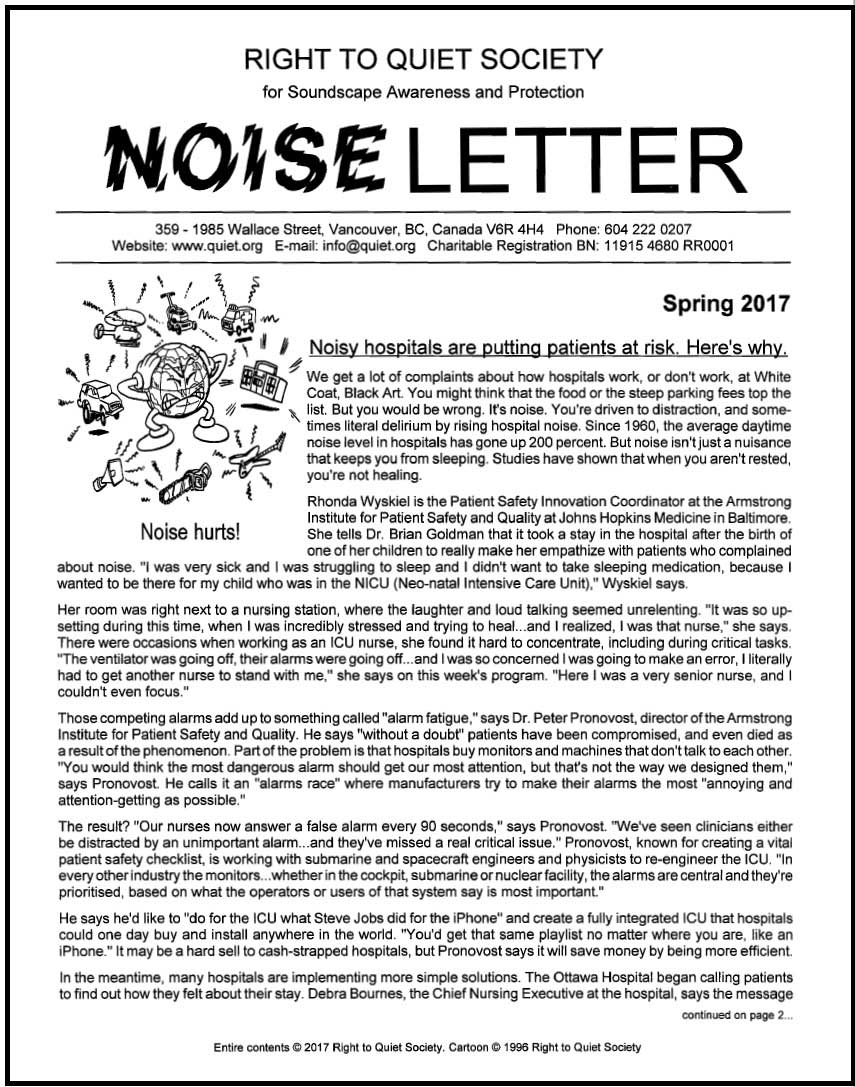
Spring 2017
Noisy hospitals are putting patients at risk: here’s why
Can’t sleep? Neither can this doctor: here’s what he did
Infrasound in mating displays: a peacock’s tail
The science of quieter cities
Do certain sounds make you want to punch someone?
The cardiovascular effect of musical genres
Ranking roster of noise exposure
35th anniversary of the Right to Quiet Society
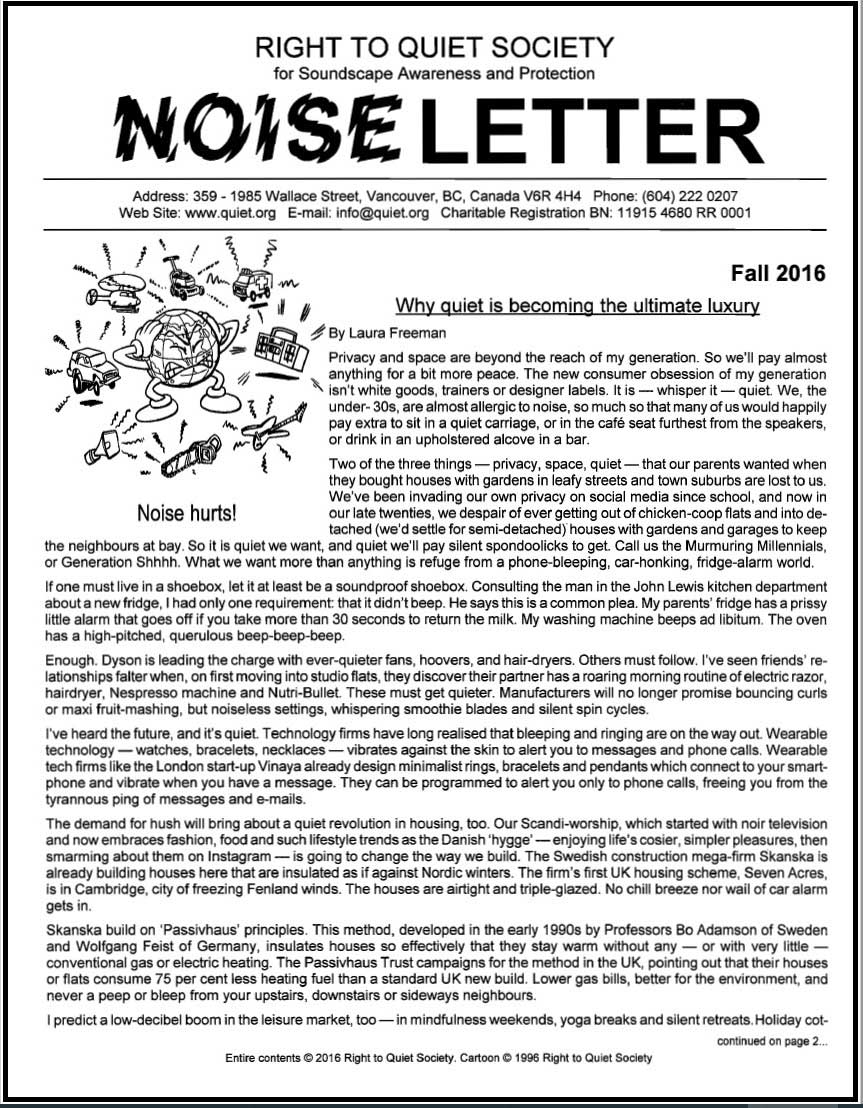
Fall 2016
Why silence is becoming the ultimate luxury
Using gliders to listen for whales 24/7
EEA Report No 14/2016
Health effects of noise
Train service in Europe
Vermont church ‘bells’ take their toll on neighbours
Tiger moths use ultrasonic signals to warn bats: toxic not tasty
Woodpecker drumming signals wimp or warrior
Noise pollution in Tokyo
Notice of Annual General Meeting
Ultrasound used to teach Cantonese
Timely response to New York Times article about disabilities
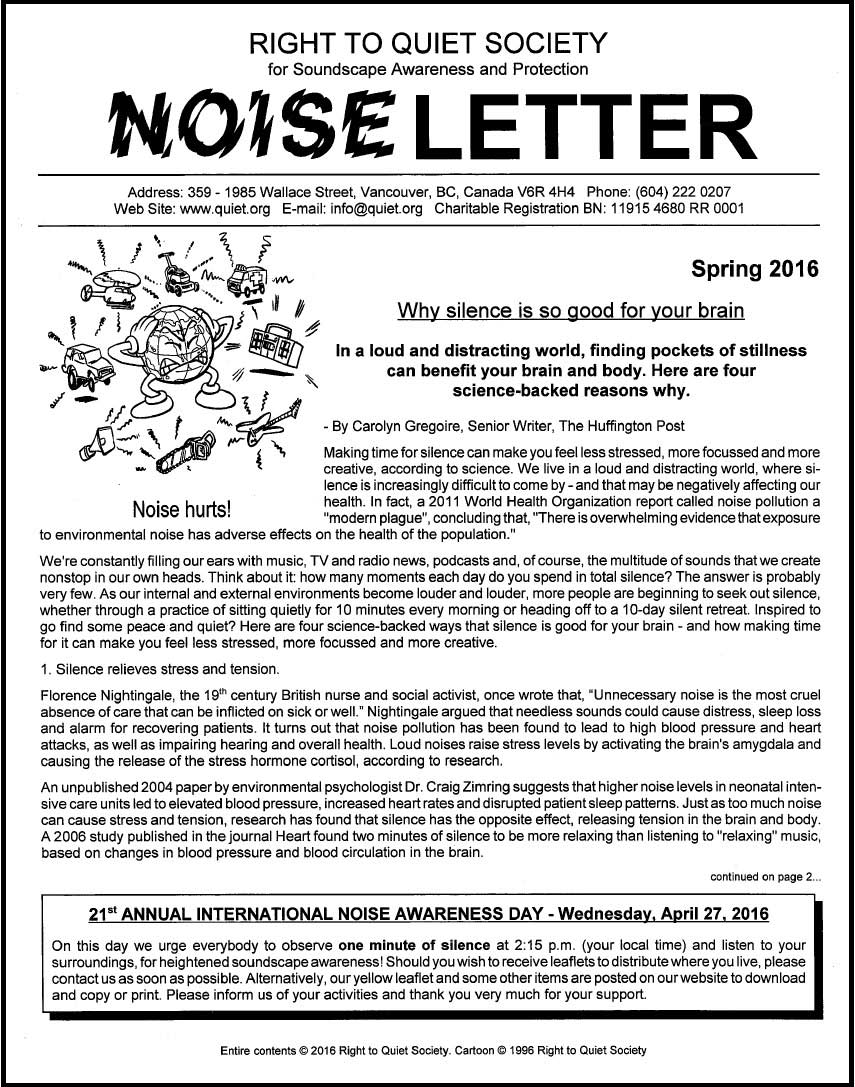
Spring 2016
Why silence is so good for your brain
Tunes for the road
Loud car stereos get earful from top court
Heathrow pays for adobe huts to protect pupils’ ears from aircraft noise
Horn honking thwarts thieves
Music in the brain
Do quiet areas afford greater health-related quality of life than noisy areas?
Film fan wants ban on eating popcorn in cinemas
The deepest, darkest place on earth is eerily noisy
The sounds of eating may reduce how much you eat